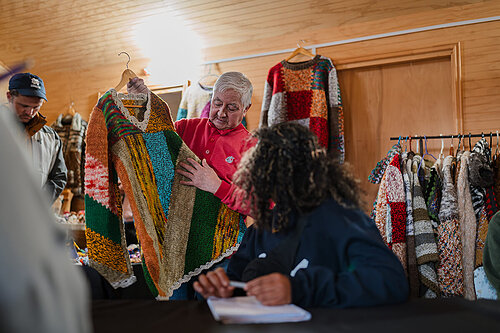
The cabin was filled with color and texture. Knitted sweaters in vivid pigments lined the walls and woven model boats and baskets were laid out carefully on tables. The warm air was filled with firesmoke and wool, a scent that had become familiar to the students in their days on Chiloé Island, Chile.
Don Segundo stood at the head of the table with a bowl of wool in front of him. His hands moved slowly and deliberately as he began speaking softly in Chiloté Spanish. Around the long table, Notre Dame students sat shoulder to shoulder, notebooks open. They followed his words and followed his hands, trying not only to understand what he was saying, but also the world behind his work.
Soon, some of these students would return to the cabin, no longer visitors, to live in Don Segundo’s home, to share meals with his family, hear stories, and learn about his craft. The lesson, like all of the lessons in Chiloé, was not just about vocabulary; it was about the value of learning from a place, rather than passing through it.
Rethinking study abroad through rural language immersion
For three weeks, before beginning their academic semester abroad, Notre Dame students live in Chiloé, an island off the southern coast of Chile. Far from the capital city of Santiago, where students will return to spend their semester, Chiloé offers something else entirely. A place of forests and richly fertile land, tightly knit communities and mythical histories, Chiloé gives students the opportunity to learn not only about the country’s culture, but through it.
For the first part of the program, students live in shared cabins, speaking only in Spanish to their teachers, the locals, and even to each other. The curriculum is led by Claudio Le Roy, a Chilean expert in immersive education who moved to Chiloé 14 years ago. Working with a team of instructors across many disciplines, he leads the students through the culture, rhythms, and realities of life in Chiloé.
This type of education is far from tourism or study abroad—it’s a deeper, richer type of learning.
“It’s reciprocity—students don’t come here just to be served by the locals,” explains Le Roy. “They are also giving to the community, and that makes miracles. It brings happiness not only for the local community but also for the students.”
The second part of the experience takes students even deeper into the life of the island. They are welcomed into host families, each offering a unique glimpse into daily life in Chiloé and reminding us that to truly understand Chilean culture, one must look beyond Santiago to the many regions that shape the country’s identity. Students partake in daily tasks, participate in community traditions, and continue their Spanish immersion.
How Chiloé Island acts as a living classroom
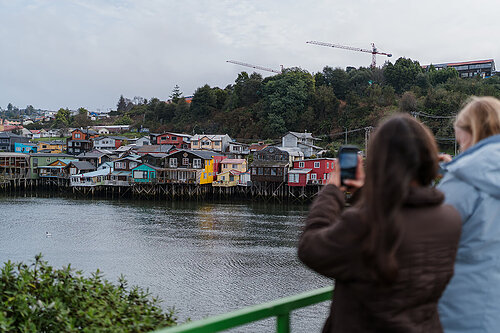
The island of Chiloé does much of the teaching itself.
Each day brings unexpected lessons, like discovering the iconic palafitos, the colorful wooden homes built on stilts across the river. Once fishermen's houses, many are now guest lodgings, a reflection of how the island has evolved while holding on to its traditions.
Students also visit some of Chiloé’s famous wooden churches, constructed in European style but built entirely from native timber. These churches, which are a UNESCO World Heritage Site, remain deeply important to community life. They also speak of how faith, craftsmanship, and adaptation came together to shape something distinctly Chiloté.
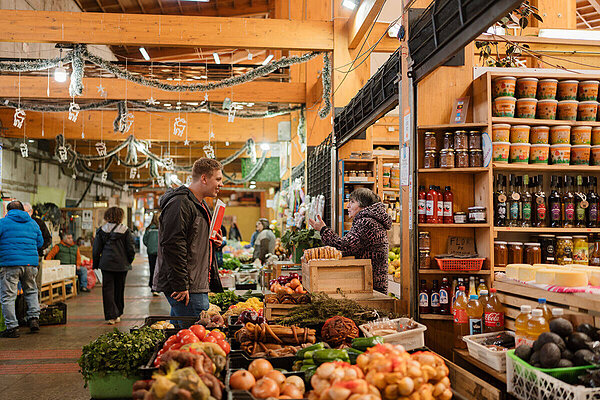
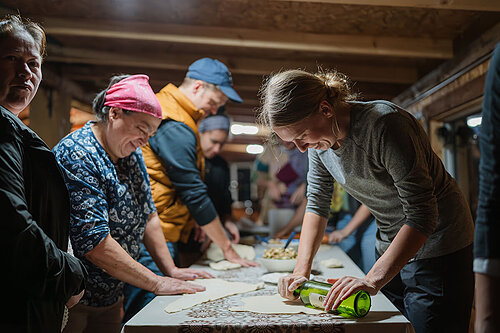
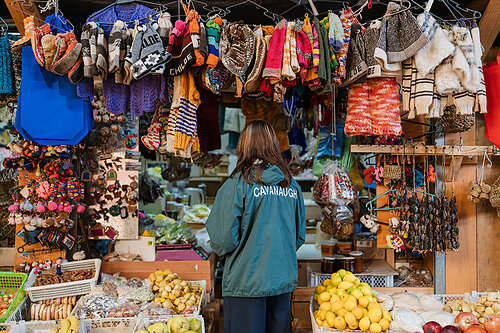
At the markets in Castro, students wander between the stalls, tasked with asking questions in Spanish about unfamiliar produce, and learning how the richness of the land and sea shapes local cuisine. Days later, with the guidance of Chiloté women, they use the same products they saw in the markets to help prepare a meal for the community, folding empanadas and making chochoca, a traditional dish of grated potato cooked on a wooden spit.
For Parker Gaines '27, the experience has been truly impactful:
“It’s rewriting what the study abroad experience means for Notre Dame students,” he says. “Rather than just coming here and asking the people to serve us, we hope that we can have a cross-cultural collaboration.”
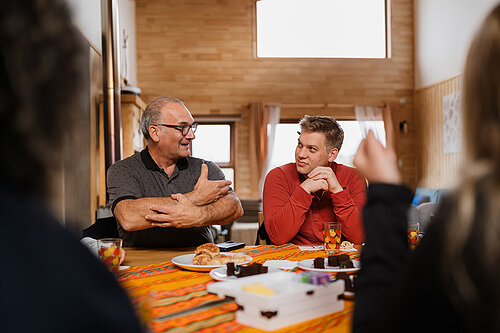
As the full days wind down, evenings offer a quiet moment. Students gather around the fire in their shared common area, unwinding, reflecting, and absorbing everything they’ve experienced. This sense of community mirrored what would come next in Santiago, when students live with host families, share daily life in Spanish, and navigate unfamiliar routines. In Chiloé, they have already begun to build the skills that will carry them through their time in Santiago.
For Gaines, these moments were particularly meaningful.
“You have the moment to sit down without your phone, without electronics, enjoy the people around you, learn more about the culture and take in the moments that really matter,” he reflects. “It prepares you so well for all of the great things that are to come in Santiago.”
From island immersion to campus life in Santiago
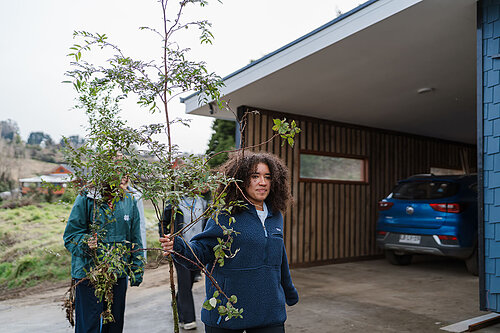
When the three weeks in Chiloé come to an end, the students continue to Santiago, where their semester abroad officially begins. Like in Chiloé, they live with host families across the city and take classes at Pontificia Universidad Católica de Chile (UC Chile), one of Latin America’s top universities.
Thanks to their time in Chiloé, they arrive in Santiago with more than just improved Spanish. They arrive with a deeper understanding of the place and culture, and a deep sense of community and safety, built slowly and strongly with the other Notre Dame students during those three weeks. They’ve already practiced how to adapt, how to listen deeply, how to navigate unfamiliar territory with openness, and their academic life is enriched by this foundational experience. The conversations in classrooms and the realities of day-to-day life in Chile are met with a deeper cultural sensitivity and curiosity.
Global education through authentic connection
Juan Esteban Montes, director of Notre Dame Santiago, believes the program is a vital part of global education:
"Doing immersive programs really changes lives. Being exposed to a different language, a different culture, a different food, or a different way of relating and forming families, really opens the eyes, the hearts, and the minds of the students,” he reflects. “It exposes them to experiences that are transformative and that they will keep forever."
This kind of experience—based on place, connection, and reciprocity—is at the heart of Notre Dame’s approach to global education. It goes beyond traditional study abroad models that focus on classroom time and cultural sightseeing. Instead, it uses immersion to encourage personal transformation and changing perspectives.
The program in Chile reflects a vision of education where students are both prepared to engage with the world and are prepared to be changed by it. Whether in a city like Santiago or a rural island like Chiloé, the world becomes the classroom, and its people the teachers.
“There are many things that you won't be able to see or understand about yourself or about the world,” says Montes. “You can see things from abroad in ways that you will never understand if you are not exposed to those realities."
Explore global opportunities with Notre Dame
To learn more about semester programs for Santiago, host family experiences, and international study, visit the official Notre Dame Santiago Programs page and read more student stories from Notre Dame Global.
Originally published by at santiago.nd.edu on November 16, 2026.