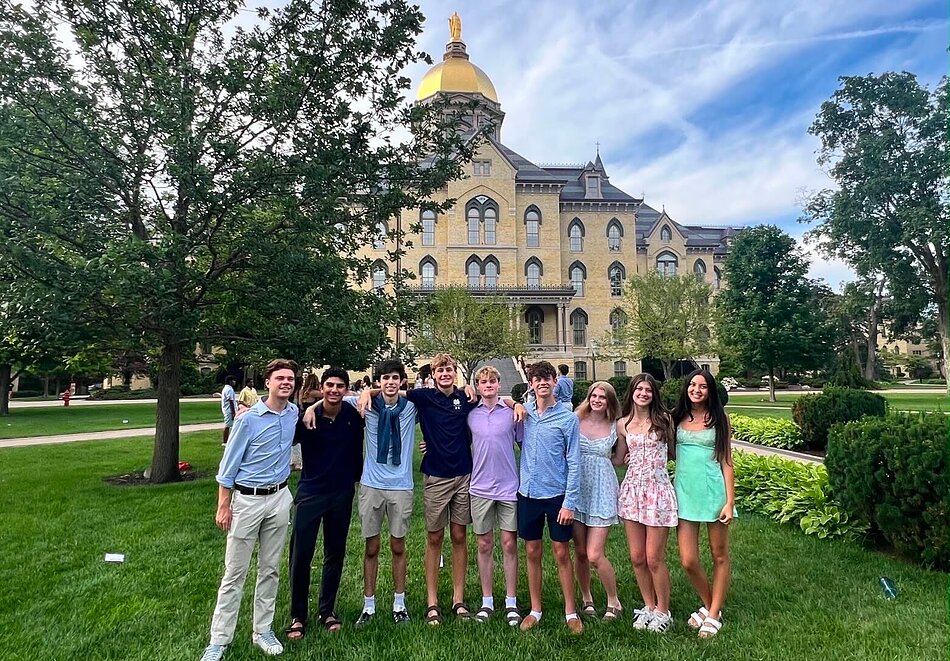
Notre Dame's Pre-College Programs bring high schoolers from around the world to campus for a preview of what college life actually is: real courses, taught by Notre Dame faculty, alongside students who've traveled from dozens of countries to sit in the same classrooms.
This year, nine Mexican students took part—one in Leadership Seminars and eight across Summer Scholars—coming from Sonora, Nuevo León, the State of Mexico, and Chihuahua, making it one of the largest and most geographically varied groups from Mexico the program has seen. Summer Scholars consists of two intensive weeks built around a single college-level course, while Leadership Seminars folds that same academic rigor into a program centered on global issues with tuition and housing covered by the University. For most participants, it's the first time they've lived away from home, taken a college course for credit, or spent two weeks fully responsible for their own schedule. What happens in that short window varies student to student, but for the Mexican students who attended, it left a mark that outlasted the two weeks and might be the beginning of something greater. Here are four of their stories.
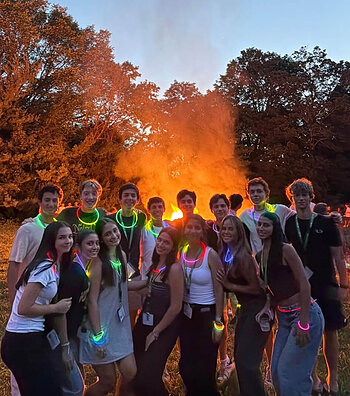
Sebastian Nouhad Saliba Cruz, who studies at Prepa Tec Campus Santa Catarina in Nuevo León and came for the Summer Scholars program, thinks about the bonfire first. While it was a simple gathering to mark the start of the program, it allowed him to interact with students he'd never met before. Throughout the program, the counselors kept finding ways to intentionally fill the two weeks so nobody had time to feel homesick. The professors also stood out to him—they were instructors who clearly knew their subjects but also seemed to really care whether he was actually learning. His Resident Counselor was there for everything else: questions about the University and the logistics of being somewhere new.
Balbina Maria Gonzalez Ruiz is also from Monterrey; she studies at the American School Foundation, and ended up in the same Summer Scholars session as Sebastian. What she remembers most is something harder to point directly—a feeling she got early on about the community around her. The staff, she says, carried themselves in a way that made the University's reputation make sense to her, something she hadn't fully understood before arriving. It didn't take her long to trust the people in the program, and that trust turned into real friendships. Months later, she's still in touch with her roommates and the friends she made there. In her course, a professor introduced her to object design, and it stuck. She says she'd like to keep studying it, ideally back at Notre Dame. That certainty has only grown since she came back to Mexico: Balbina is now working on her Early Action application to Notre Dame, calling the two weeks she spent there the moment she knew the University was the right place for her.
Fernanda Mendoza Rangel came from Instituto México de Ciudad Juárez, in Ciudad Juárez, Chihuahua, for the Leadership Seminars program. She went in wanting to learn, and came out having learned something she didn't expect. Two weeks away from home, she says, gave her clarity about what she wants for her future that she didn't have going in. The program taught her more about herself than about any particular subject.
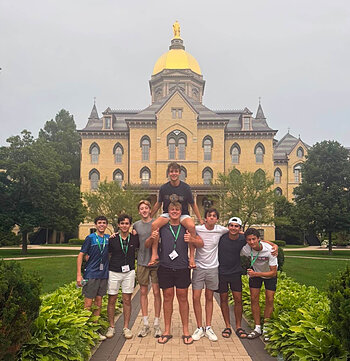
Isaí Alejandro Hurtado studies at Preparatoria Alfa Fundación in Monterrey—a school that works with high-achieving students from public schools, many of whom wouldn't otherwise have a clear path to an opportunity like this one. When Isaí arrived at Notre Dame, he noticed the sky first. He was impressed by how clear it looked compared to home, and how the campus's size and architecture caught him off guard. Friendships came fast for him, helped by a shared passion for the World Cup; he and the students he met from all over the world gathered to watch matches together. He ran the OutstaNDing Race at the start of the Notre Games and calls it the hardest cardio he's ever done. He built a programmable circuit board in an engineering course that he plans to keep using for robotics competitions back in Monterrey, proudly showing Notre Dame's logo. But what stuck with him the most was the service trip to Green Bridge Growers, a farm that employs adults on the autism spectrum. Isaí is on the spectrum himself, and something about the place touched him deeply: a woman named Janice told him, simply, that he had a home there. He says he'd like to go back one day. He says he'd like to come back to Notre Dame, too.
All four were on Notre Dame's campus for the same reason but came away with different things,and they were not the first Mexican students to find out the importance of Pre-College Programs. For example, Paulina Turner Castelo went through Summer Scholars in 2022, from the American School Foundation of Monterrey. Gastón Gutiérrez Yáñez did the same in 2023, also from Monterrey. Santiago Paredes León came from Mexico City's American School Foundation in 2024. All three are Notre Dame students now.
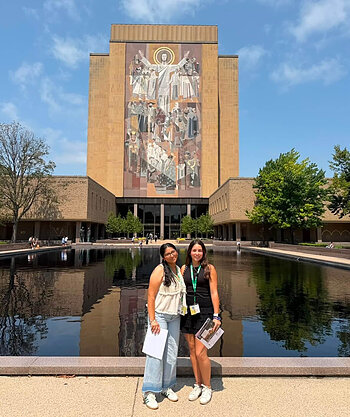
For a high schooler, two weeks can sound small next to four years of university or a lifetime of decisions still ahead. But the students who've come through Notre Dame's Pre-College Programs know those two weeks tend to do something disproportionate to their length and are more than a summer experience. This program is designed to work as a first door, a small, deliberate sample of what it's like to live on a college campus: sharing a dorm with students from other cities and countries, being responsible for your own schedule, starting to figure out independently what you actually want to study.
Sebastian found an answer in a community that showed up for him. Balbina found hers in a professor who introduced her to a subject she didn't know she needed. Fernanda found hers by stepping far enough away from home to see herself more clearly. Isaí found a place in an engineering lab and an unexpected home outside campus, places he felt like he belonged. None of them left with a finished plan. All of them left with somewhere to start, and hopefully, sooner rather than later, we will see some of them again as Notre Dame students.
Originally published by at mexico.nd.edu on September 04, 2026.